The speed of business has changed. Customers expect replies in seconds, not hours, and traditional messaging tools simply cannot keep up. AI customer communication management is no longer a nice-to-have. It is the new baseline for any team serious about customer satisfaction. In this case, the best platforms utilize generative AI, artificial intelligence technology to draft answers, auto-triage the incoming queries, and route the conversation to the appropriate agent or resolve them immediately.
Older software systems have been designed keeping the previous generation in mind. They function on the principle of manual elimination, but even then compel humans to manually categorize, prioritize, and allocate each interaction with the customers. AI-based platforms analyze each customer conversation and provide contextually relevant responses that improve with time. Consequently, they provide fast answers, save money, boost customer satisfaction, and equip you with all the required tools.
Here are the 7 best AI-powered CCM platforms leading the shift in 2025.
The 7 Best AI Customer Communication Management Platforms
1. Airchannel AI: The Leader in AI Customer Communication Management
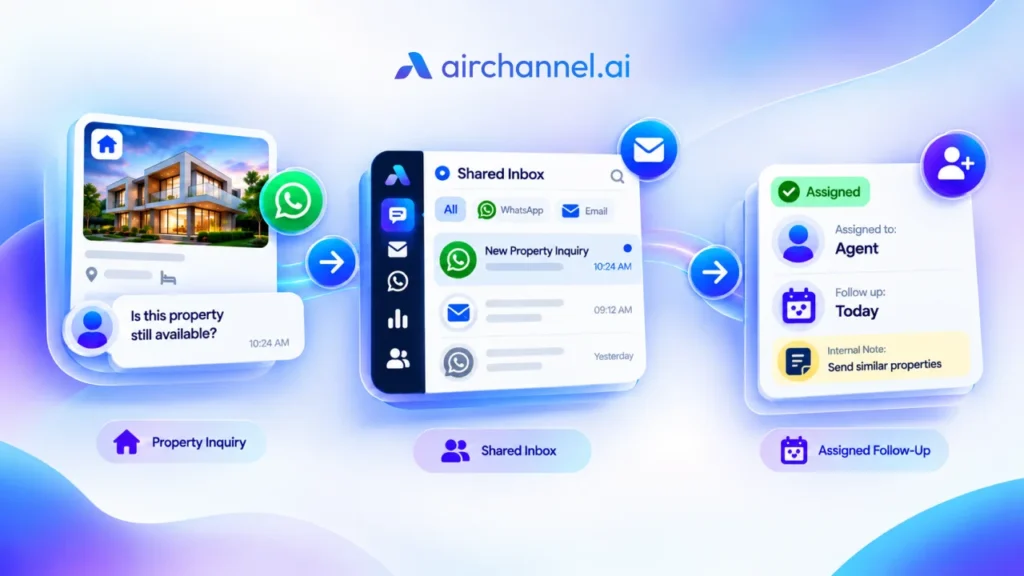
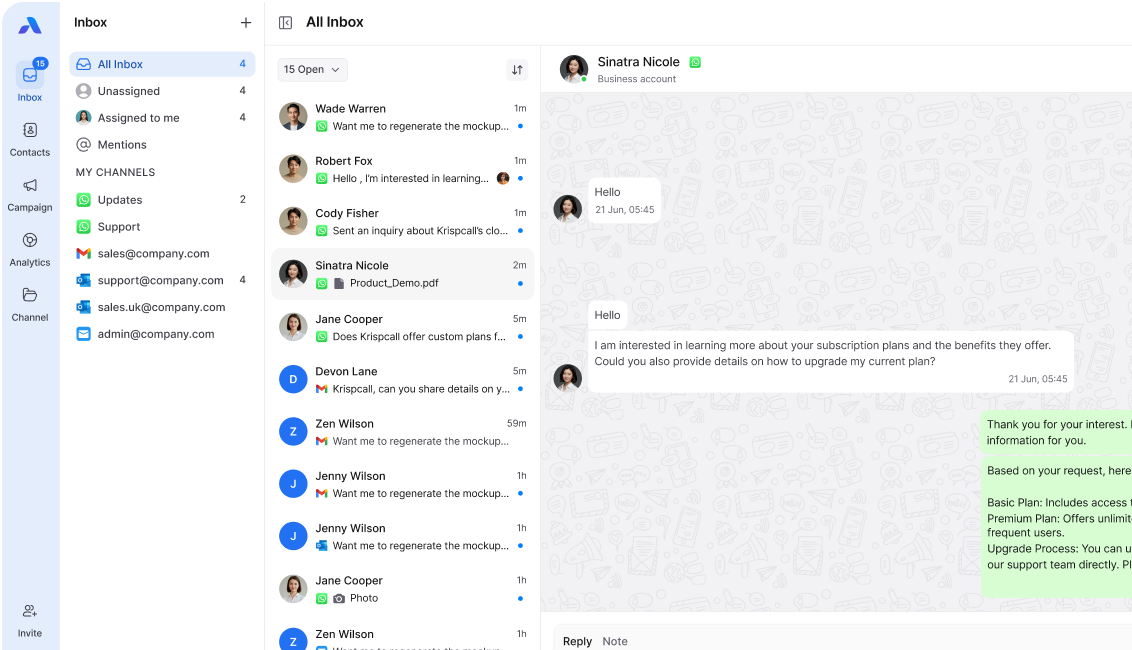
AirChannel is a unified customer communication platform built to help teams manage conversations across WhatsApp, email, and other business channels from one shared workspace. AirChannel is currently in beta, with AI-powered features planned as part of the product roadmap.
Today, teams can bring customer conversations into one place, assign conversations to the right team members, add internal notes, and collaborate without switching between separate inboxes. As AirChannel develops, upcoming AI features will focus on helping teams draft replies, understand conversation context, automate routine tasks, and manage customer communication more efficiently.
What AirChannel offers today and what’s coming:
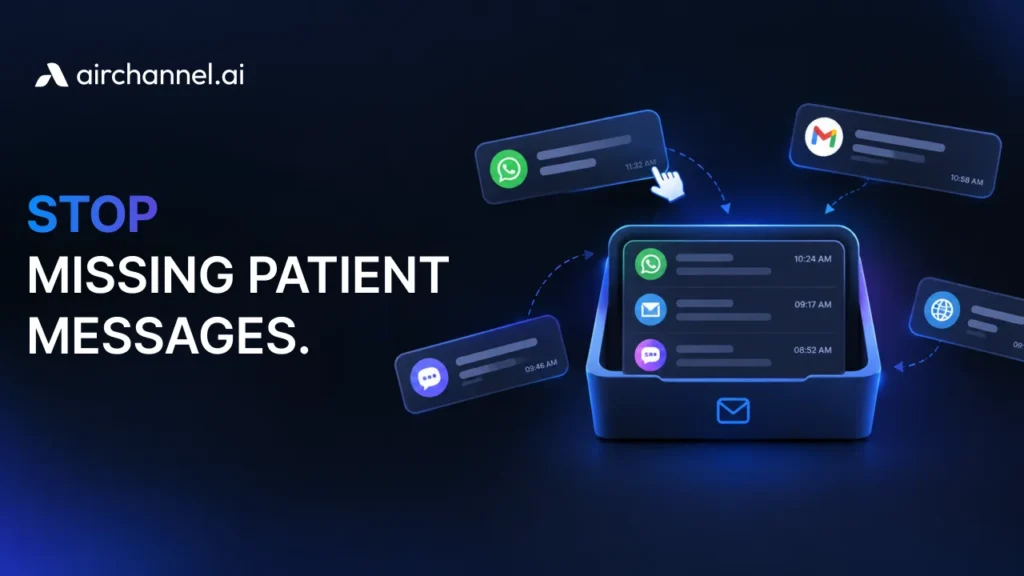
- Unified inbox: Bring WhatsApp and email conversations into one shared workspace so teams can manage customer messages without switching between apps.
- Team collaboration: Assign conversations, add internal notes, and give team members visibility into ongoing customer conversations.
- Conversation management: Keep customer messages organized so teams can track conversations and reduce the chance of missed replies.
- AI-assisted replies — coming soon: Planned AI features will help teams create context-aware reply suggestions based on conversation history and brand guidelines.
- AI-powered routing — coming soon: Future automation will help route conversations based on factors such as topic, urgency, and team availability.
- AI automation — coming soon: AirChannel plans to introduce AI capabilities that can help teams handle repetitive customer communication tasks while keeping human agents in control.
- More channel integrations — coming soon: Additional channels and integrations are planned as AirChannel continues to expand its unified workspace.
AirChannel is currently in beta, and its AI capabilities are still being developed. The goal is to combine a shared customer communication workspace with AI-assisted tools that help teams manage conversations faster without removing human control.
2. Intercom
Best For: AI chatbots and autonomous front-line support with Fin AI
Key AI Feature: Fin AI is Intercom’s autonomous AI agent that resolves customer queries end-to-end without human agent involvement, pulling answers directly from your knowledge base as its source of truth.
Pros:
- Fin AI handles a high volume of repetitive customer interactions autonomously, boosting customer satisfaction by reducing wait times and reducing manual workload for human agents
- Powerful customer segmentation and proactive live chat tools to deliver personal, automated outreach across all communications channels
Con: Pricing escalates quickly as usage and contact volume grow, making it difficult to budget predictably for fast-scaling teams
3. Zendesk
Best For: Advanced AI case summarization and enterprise-grade support workflows
Key AI Feature: Zendesk AI offers intelligent triage, auto-tagging, case summarization, and suggested macro responses, all designed to route conversations faster and cut human agent resolution times at scale.
Pros:
- AI automation automatically categorizes and route conversations, reducing manual sorting so the right human agent handles each customer interaction without delay
- Comprehensive analytics and AI assist insights give support managers powerful tools to identify gaps in customer satisfaction and improve customer experiences over time
Con: The most powerful AI features are gated behind premium plan tiers, making the full AI-powered experience costly for smaller teams
4. Salesforce Service Cloud
Best For: Einstein AI predictive analytics and deep CRM-integrated support
Key AI Feature: Einstein AI delivers predictive case routing, next-best-action recommendations, and automated customer conversation summaries, all pulling from live CRM data to deliver personal experiences in every interaction. A leading customer service platform for enterprise teams already in the Salesforce ecosystem.
Pros:
- Seamless connection between live chat, email, and full customer data creates a 360-degree view, giving human agents the powerful tools they need to resolve issues faster
- Einstein’s predictive analytics help teams anticipate customer needs before a complaint is raised, using artificial intelligence and AI assist features to shift support from reactive to proactive
Con: Salesforce Service Cloud requires significant onboarding investment and often a dedicated administrator to configure and maintain the knowledge base and AI workflows effectively
5. Front
Best For: AI-powered collaboration in shared inbox environments
Key AI Feature: Front’s AI assists in drafting replies, summarizes long customer conversation threads, and suggests the best next action, helping teams collaborate on complex customer interactions without losing context.
Pros:
- AI conversation summarization saves human agents from reading long back-and-forth histories, cutting time-to-resolution and improving customer satisfaction on complex tickets
- Collaboration tools like shared drafts, internal comments, and team assignments make Front ideal for cross-functional teams looking to resolve issues together without duplication
Con: Front’s AI automation features are still maturing compared to AI-native platforms, and deep omnichannel support to route conversations across live chat and SMS requires additional third-party integrations
6. Gorgias
Best For: AI-powered e-commerce customer support automation
Key AI Feature: Gorgias uses artificial intelligence to auto-close low-complexity e-commerce queries (order status, return requests, tracking updates) and route conversations to the right human agent with full order context pulled from your knowledge base automatically.
Pros:
- Deep integrations with Shopify, BigCommerce, and WooCommerce make it the strongest AI automation tool for e-commerce teams, reducing manual ticket handling without adding headcount
- AI-driven macros and auto-responses handle high volumes of repetitive customer interactions, delivering consistent, on-brand replies that protect customer satisfaction across all touchpoints
Con: Gorgias is purpose-built for e-commerce and lacks the flexibility needed for B2B, SaaS, or service-based businesses with more complex customer conversation workflows
7. HubSpot Service Hub
Best For: AI-driven CRM integration and unified customer data management
Key AI Feature: HubSpot’s AI assist tools include conversation intelligence, automated ticket creation from emails and live chat, and AI-generated reply suggestions, all deeply connected to the HubSpot CRM and knowledge base for full customer context.
Pros:
- Native CRM integration means every customer interaction is automatically logged, giving sales and support teams the powerful tools they need to deliver personal, data-informed experiences
- AI-powered reporting and feedback tools make it easy to track customer satisfaction trends and resolve issues proactively across the full customer lifecycle
Con: HubSpot Service Hub’s AI features are most powerful when you are already using the full HubSpot ecosystem. Standalone, it is less competitive than purpose-built AI automation platforms for customer communication
AI Feature Comparison: Top 3 Platforms
| Feature | Airchannel AI | Intercom | Zendesk |
| AI Assist / Response Drafting | Native generative AI assist | Fin AI agent (autonomous) | Suggested macros (add-on) |
| Route Conversations | Auto-routes all channels instantly | Rule-based + Fin AI agent | AI triage (premium tier) |
| Live Chat Support | Built-in | Built-in | Built-in |
| Knowledge Base Integration | Yes, trains AI on your content | Yes, powers Fin AI | Yes, via Help Center |
| AI Governance | Built-in controls and oversight | Limited | Basic guardrails |
| Setup Complexity | 5 minutes, no-code | Days to weeks | Weeks to months |
Why Invest in AI Customer Communication Management?
The shift from static documents and manual helpdesks to dynamic AI customer communication management is not a trend. It is a structural change in how businesses operate. AI in customer service is now the primary driver of competitive advantage for support teams across every industry.
Traditional customer communication management software was built for a world where customers waited 24 to 48 hours for a reply and human agents manually handled every customer interaction from start to finish. This is not the case anymore. Modern-day consumers require immediate and personalized answers through live chats, emails, texts, and social media simultaneously.
Some of the top artificial intelligence automation solutions incorporate artificial intelligence to direct conversations, leverage a comprehensive database to compose precise answers, and manage AI governance to maintain brand consistency in every response.
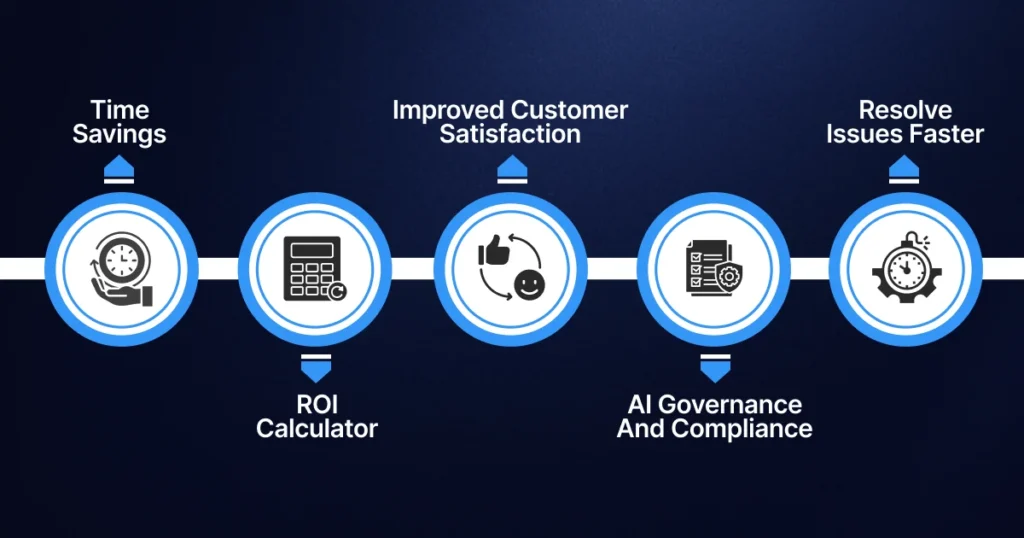
Time Savings Through Reducing Manual Work: AI-assisted support and AI-powered automation remove the need for manual labor to craft replies, categorize conversations, and manually transfer tickets. The teams that have incorporated these highly effective technologies claim that they process much higher volumes of customer interactions with the same number of personnel. This way, humans perform the job that demands their intervention.
ROI Calculator: What AI Saves You. If your team handles 500 customer conversations per day and AI automation handles 70% of them, you recover roughly 350 human agent hours daily. At an average fully loaded cost of $25 per hour, that is $8,750 saved every single day. Use an ROI calculator when evaluating platforms to make the business case clear to stakeholders before you commit.
Improved Customer Satisfaction: The two factors that play major roles in making customers satisfied are speed and personalization. Customer satisfaction is achieved through AI-powered customer services due to their quick response using live chats and emails, and the personalized response that they give based on the unique customer’s interaction history.
AI Governance and Compliance: As artificial intelligence becomes more deeply embedded in every customer interaction, AI governance matters more than ever. The right customer service platform gives you controls over how the AI agent responds, what it can and cannot say, and how it handles sensitive customer conversations, so your brand stays protected as you scale.
Resolve Issues Faster With a Smarter Knowledge Base: A connected knowledge base is what separates a good AI assist tool from a great one. When your AI agent can pull from an up-to-date knowledge base to resolve issues instantly, human agents spend less time searching for answers and more time building customer relationships.
The right customer communication management software does not just make your support team faster. It makes your entire business more competitive. As artificial intelligence improves, the gap between teams using AI-native platforms and those still on legacy systems will only widen.
Conclusion: Waiting Is the Real Risk
The businesses winning on customer satisfaction in 2026 are not the ones with the biggest support teams. They are the ones with the smartest tools. AI customer communication management is no longer a future investment. It is a present-day requirement.
Every day spent on a legacy customer service platform is a day of slower replies, missed customer interactions, and avoidable churn. AI-native platforms like Airchannel AI give your team the powerful tools to route conversations instantly, deliver personal experiences at scale, support human agents with AI assistance, and maintain full AI governance across every channel, from live chat to email.
The future of AI in customer communication is omnichannel, intelligent, and fast. Airchannel AI is already there.👉Request a Demo and experience the future of AI customer communication management with Airchannel AI.