That’s once every 10 minutes. Every single day.
We have more apps than ever. We use fewer than ever. And somehow, we can’t stop opening our phones.
Before we talk about where this mess is going, let’s talk about how we got here.
This is the history of apps. And it started way before the App Store ever existed.
It Started Long Before the App Store
Most people point to 2008 as the beginning of apps. That’s when Apple launched the App Store with 500 apps on day one.
But go back a little further.
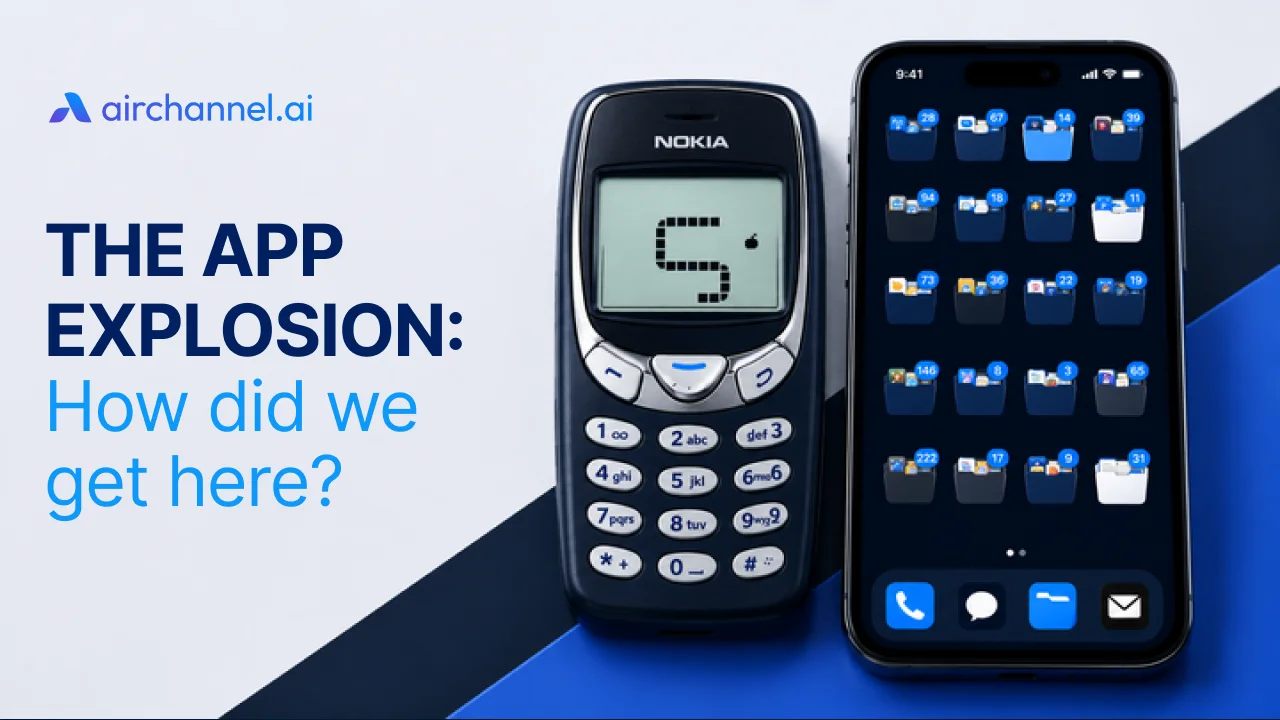
Remember Snake on Nokia phones? That was 1997. Millions of people played it. No download needed. It came pre-loaded on the phone. It was simple, addictive, and the first time a phone felt fun.
Then came ringtone downloads, wallpapers, and basic Java games in the early 2000s. Phones were becoming tiny entertainment systems – slowly, quietly, before anyone used the word “app.”
The App Store didn’t start the fire. It just poured gasoline on it.
The Gold Rush (2008-2012)
When Apple opened the App Store in July 2008, something clicked.
Suddenly, anyone could build an app and sell it to millions of people overnight. Developers, students, small companies, and big brands all jumped in at once.
Key moments from this era:
- 2008 – App Store launches with 500 apps. Within 3 days, 10 million downloads happen.
- 2009 – WhatsApp launches. People stop paying for SMS. Carriers panic.
- 2010 – Instagram goes live. 1 million users sign up in the first 3 months.
- 2011 – “There’s an app for that” becomes a real cultural phrase. Apple trademarks it.
- 2012 – Google Play Store crosses 600,000 apps. The race is on.
Teenagers were building apps in their bedrooms. Startups were raising millions based on app ideas alone. It felt like anyone could strike gold.
Apps Grew Up: From Games to Real Life
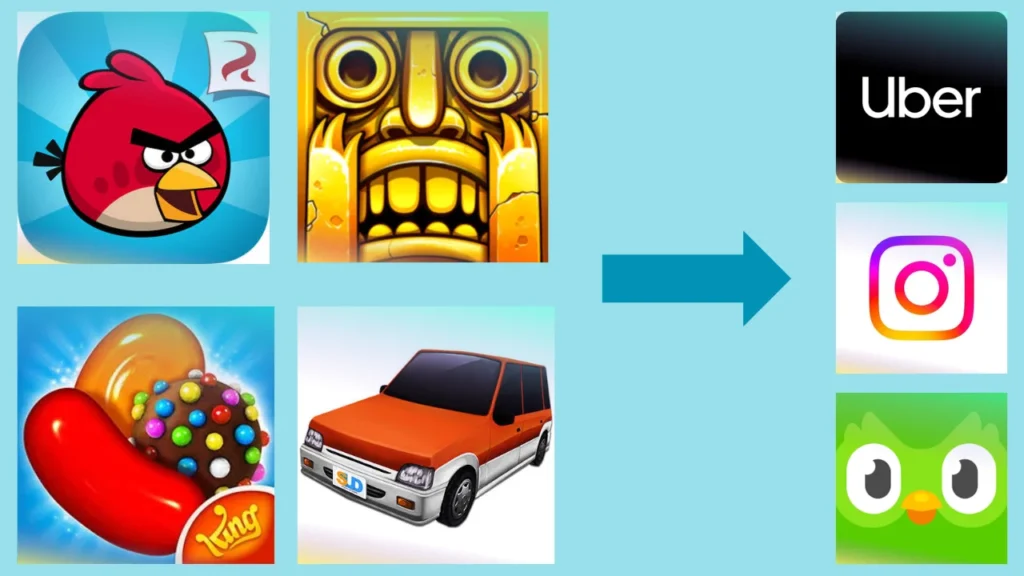
At first, apps were mostly games and fun stuff. Angry Birds. Temple Run. Candy Crush.
Then something shifted.
Apps stopped being entertainment. They became tools for real life.
- Uber (2010) – You could call a car from your phone. No cash, no flagging, no waiting.
- Instagram (2010) – Your phone became a camera, editor, and broadcast studio in one.
- Mobile banking (2011 onwards) – You could check your balance, transfer money, and pay bills without stepping into a bank.
- Duolingo – Your phone became a classroom and a therapist.
Apps were no longer extra. They were essential.
The Problem Nobody Talks About: App Fatigue
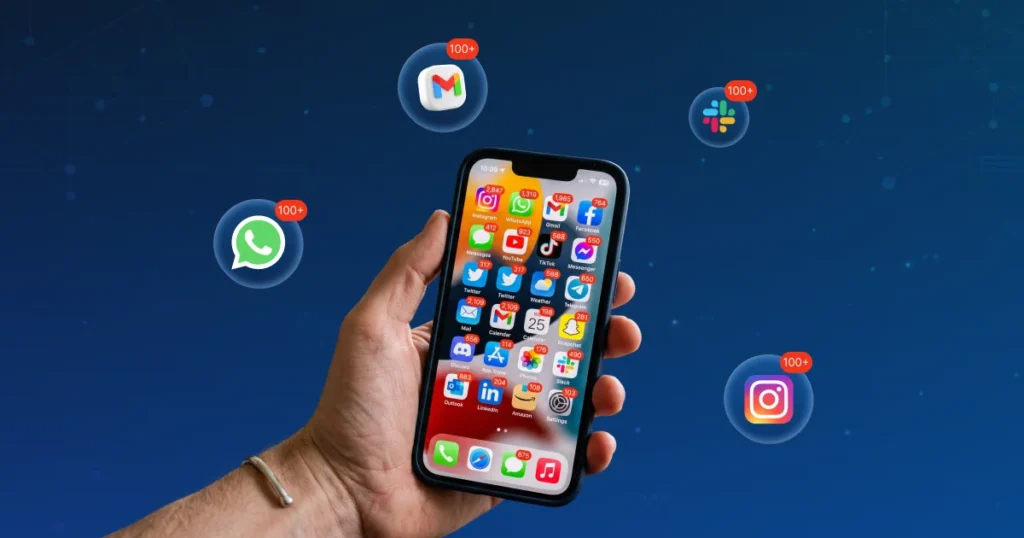
Here’s the number that should stop you cold.
The average person has 80+ apps on their phone. But they only use 9 of them regularly.
That means about 70 apps are just sitting there. Taking up space. Sending notifications nobody reads. Creating a quiet kind of stress.
Think about your own phone for a second. How many apps did you open last week? How many did you forget you even had?
This is app fatigue. And it’s real.
Our phones are loud. Notifications interrupt us 80 times a day on average. We spend more time managing apps than actually getting things done. We switch between tools constantly – and every switch costs focus.
The problem isn’t that we have too few apps. The problem is we have too many.
The Next Step Isn’t Another App

Here’s what’s interesting about the history of mobile apps.
Every chapter solved something. And then created a new problem.
Snake gave us fun on phones. The App Store gave us a choice. And now we’re drowning in that choice.
So what comes next? It’s not another app.
The next step is using AI to manage the apps we already have – cutting the noise, connecting the tools, and letting you focus on the work that matters.
That’s exactly what people are starting to explore with Airchannel AI. Instead of adding to the pile, it helps you simplify it. If you’ve ever felt overwhelmed by your own phone, it’s worth checking out.
But here’s a question worth sitting with.
Apps didn’t just change how we work and live. They changed how businesses talk to us. Every notification, every push alert, every ad inside a free app – that’s marketing. And it’s unlike anything that came before.
How did apps turn your phone into the most powerful marketing tool ever built? And what does that mean for the businesses trying to reach you?
Next in the series: The History of Marketing – how apps rewrote the rules of how brands connect with people, and why your attention became the most valuable thing on the internet.
That one is going to hit different. Stay with us.
This is Part 2 of The Evolution of Technology series by Airchannel AI. Missed Part 1? Read The History of Software Development first.